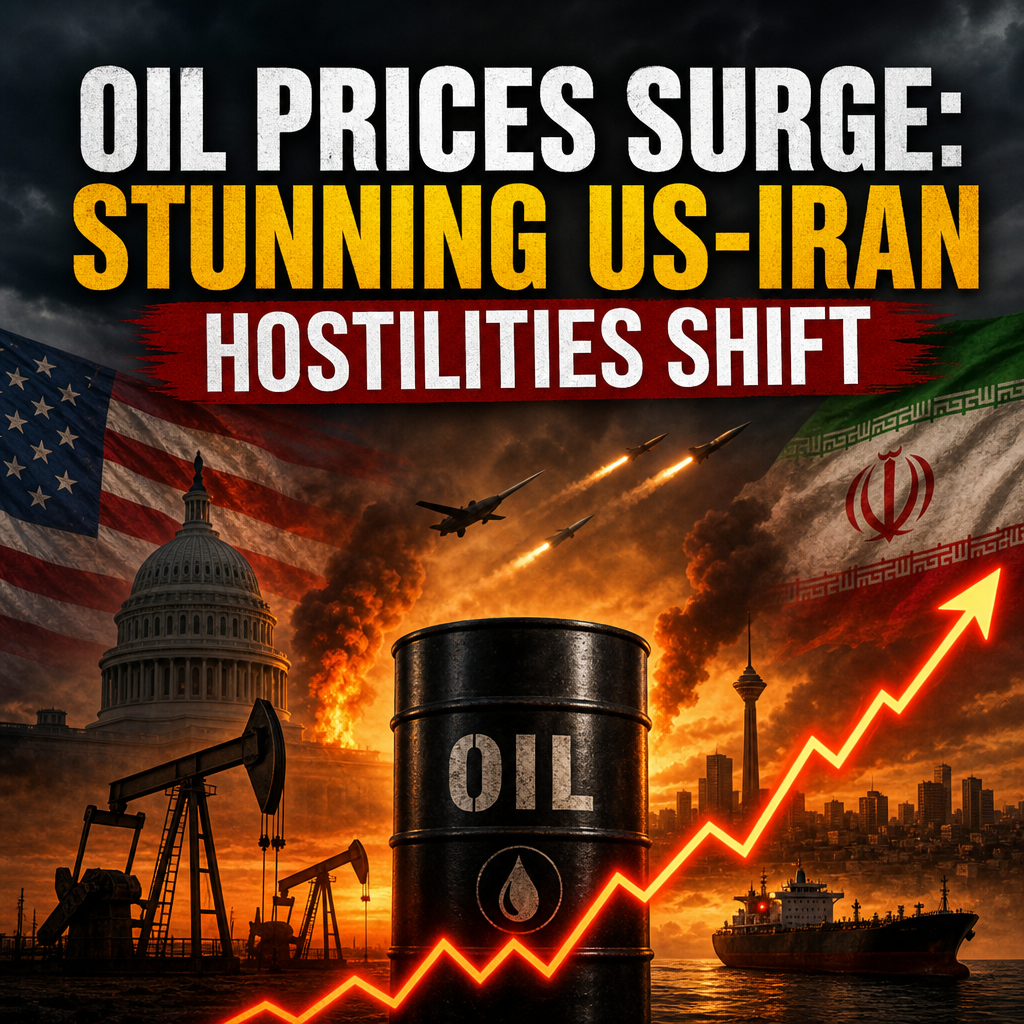
Oil Prices Surge: Stunning US-Iran Hostilities Shift


Oil prices surge when the Middle East edges closer to confrontation, and the latest spike driven by US-Iran hostilities is a reminder that energy markets still price in geopolitics as quickly as barrels and balance sheets.
What makes this moment especially volatile is that traders are not just reacting to one headline. They are weighing the risk of a wider regional escalation, the possibility of disruptions in the Strait of Hormuz, and the political signal sent by Washington and Tehran as both sides harden their positions. Across the coverage from international outlets, the common thread is clear: even without a full-scale conflict, the mere prospect of one can jolt oil higher fast.



Why markets react so sharply to US-Iran tensions
Oil is one of the world’s most geopolitically sensitive commodities, and US-Iran tensions remain among the biggest flashpoints for supply security. A direct or indirect clash can immediately raise concerns about tanker traffic, export infrastructure, and insurance costs. In practical terms, traders do not need a supply cut to happen before they bid prices up; they only need to believe that one might.
That logic has been visible in the latest market response. Reports across the wire describe investors moving into crude after hostilities intensified, with the fear premium rising even before any physical disruption was confirmed. For energy analysts, this is familiar territory. Iran sits near a critical shipping corridor, and any sign of military escalation can send oil higher because the market hates uncertainty more than it hates bad news.




At the same time, not every source frames the situation the same way. Some coverage emphasizes the strategic calculation behind the U.S. response, suggesting that the administration wants to deter further Iranian action without drifting into a wider war. Others focus more on the regional fallout, especially how quickly allies, shipping operators, and neighboring states could be pulled into a broader cycle of retaliation.
That difference matters because it changes how long the price move might last. If the crisis is viewed as a short-lived show of force, oil can retrace quickly. If traders begin to believe the confrontation is part of a longer pattern, the risk premium can remain embedded for weeks.
What the latest surge says about the oil market
The current rally tells us three things about the market:
– Supply risk still dominates sentiment. Even in a world of shale production and diversified import routes, the Middle East remains central to price psychology.
– Investors respond to headlines before facts catch up. Futures markets often move on expected disruption, not confirmed disruption.
– Confidence in containment is fragile. If military rhetoric escalates, oil gains can accelerate even if physical shipments continue normally.
There is also a broader economic angle. Higher crude prices can feed into gasoline costs, shipping expenses, and inflation expectations. That makes this more than a narrow energy story. For governments already dealing with sluggish growth or sticky inflation, a geopolitical oil shock can complicate policy fast.
Different media lenses, same underlying uncertainty
The outlets covering the story bring different emphases, and that is useful because it prevents a one-note interpretation. One perspective highlights the economic consequences for consumers and traders, treating the surge primarily as a market event. Another focuses on the political brinkmanship, asking whether both sides are using force and rhetoric to signal resolve rather than to seek open conflict. A third places the story in the broader regional context, where proxy tensions, shipping security, and the Israel-Iran dynamic all interact with U.S. policy.
That mix of angles leads to a fairer conclusion: the oil price jump is real, but the meaning of the jump is still uncertain.
On one hand, the market may be correctly pricing a genuine threat. Iran has the capability to disrupt regional stability, and the U.S. has every reason to prepare for that possibility. On the other hand, price spikes often overshoot. History shows that oil can jump on fear and then fall back once it becomes clear that shipping lanes remain open and that diplomacy, however strained, is still functioning.
That is why it would be premature to read the surge as proof of a lasting supply shock. It is better understood as a warning signal: the market sees a narrower margin for error, and that margin could shrink further if either side miscalculates.
What could happen next
The next move in oil will depend less on abstract commentary and more on whether the standoff spreads or stabilizes. If the situation remains limited to rhetoric, sanctions, and periodic strikes or threats, crude may eventually settle back as traders reassess the likelihood of actual disruption. If attacks intensify or shipping lanes come under pressure, prices could climb further and stay elevated.
A few scenarios stand out:
1. De-escalation through signaling
Prices cool if both sides emphasize restraint and no key infrastructure is hit.
2. Prolonged tension without major disruption
Oil remains elevated as markets keep a geopolitical premium in place.
3. Direct disruption to supply or transit
Prices move sharply higher, potentially triggering broader inflation concerns.
The most responsible interpretation right now is cautious rather than dramatic. The latest rise in oil prices is not just about barrels; it is about the market trying to quantify the risk of a confrontation that could affect global trade. What makes this episode so consequential is that it sits at the intersection of diplomacy, military signaling, and energy security.
For consumers, businesses, and policymakers, the lesson is simple: as long as U.S.-Iran hostilities remain a live issue, oil will remain vulnerable to sudden swings. And in an already tense global economy, that is a risk few can afford to ignore.